




If you're juggling multiple credit card payments every month, you know how chaotic it can feel. Each card has its own due date, its own minimum payment, and its own painfully high interest rate. It’s a stressful balancing act that never seems to end.
A credit card consolidation loan is designed to hit the reset button on that chaos. It rolls all those high-interest balances into a single new loan, leaving you with just one predictable monthly payment, often at a much lower interest rate. This simple move can make it easier to manage your finances and finally start paying down your debt for good.
How Do Credit Card Consolidation Loans Actually Work?
The idea is pretty straightforward. You apply for a new personal loan for the total amount you owe across all your credit cards. If you're approved, the lender might send the money straight to your bank account so you can pay off the cards yourself. Or, in some cases, they'll handle it for you and send the payments directly to your credit card companies.
Either way, this one move helps you accomplish a few key things all at once:
- You simplify your payments. Instead of juggling several bills, you now have just one consistent payment to worry about.
- You slash your interest rate. You get to trade in those high-interest credit card rates—often 20% APR or even higher—for a personal loan with a much more manageable fixed rate.
- You get a clear finish line. Unlike credit cards, these loans have a set term, like 3 or 5 years. You'll know exactly when you'll be debt-free.
This strategy is especially powerful when you feel like you're just treading water. With American credit card debt soaring past $1.21 trillion, a 6.14% jump from the previous year, it's clear that a lot of people are feeling that pressure. Taking proactive steps like consolidation can make a real difference. Just look at Australia, where a similar focus on consolidation helped lead to a 4.2% drop in active credit card accounts in a single year.
The Mechanics of Consolidation
Think of your high-interest credit card balances like a bunch of small, fast-burning fires scattered across your financial life. A consolidation loan acts like a big water tanker that comes in and puts out all those little fires at once. Now, all you have to do is focus on refilling the tanker—your new loan—at a much slower, more manageable pace.
If you really want to see why this matters, play around with a credit card minimum payments calculator. You'll quickly see how making only the minimum payments can keep you trapped in debt for decades.
A consolidation loan provides a structured path out of debt. By locking in a fixed rate and a clear repayment schedule, you stop the cycle of compounding interest that keeps so many people trapped.
Consolidation Loan vs Multiple Credit Cards At a Glance
Let's break down the "before and after" picture. Seeing the differences side-by-side makes it obvious why this is such a popular strategy. Once you understand the basics, you can explore the various debt consolidation loan options to see which one fits your situation.
Here's a quick look at how things change.
| Feature | Managing Multiple Credit Cards | Using a Consolidation Loan |
|---|---|---|
| Payments | Multiple due dates and amounts to track | One predictable monthly payment |
| Interest Rate | High, variable APRs (often 20%+) | Lower, often fixed APR |
| Payoff Timeline | Unclear, could take decades | Fixed term (e.g., 36 or 60 months) |
| Mental Stress | High, due to complexity and juggling | Low, thanks to simplicity and a clear plan |
The bottom line is you're not just shuffling debt from one place to another. You're creating an efficient, actionable plan to get rid of it for good.
Weighing the Benefits and Risks of Consolidation

Deciding to take out a credit card consolidation loan is a big financial step, so it’s critical to look at the whole picture—both the upsides and the potential downsides. This isn’t just about shuffling numbers around; it’s about changing your financial trajectory for the better.
On one side of the scale, the benefits are pretty compelling and can bring immediate relief. But on the other side, the risks demand some serious thought and a real commitment to better financial habits.
The Upside of Consolidating Your Debt
The most obvious benefit is simplicity. Instead of juggling a handful of credit card bills, each with its own due date and minimum payment, you roll everything into a single, predictable monthly payment. That alone cuts down on the mental gymnastics and lowers the odds of missing a payment and getting hit with a late fee.
Another huge plus is the potential to save a ton of money on interest. High-interest credit cards can feel like a financial treadmill—you’re running hard but getting absolutely nowhere.
By trading multiple high-APR cards for one loan with a lower, fixed interest rate, more of your payment actually goes toward paying down the principal. That simple move can save you thousands and seriously shorten your path to being debt-free.
This kind of financial pressure is incredibly common. The average U.S. adult is carrying around $7,886 in credit card debt, and with 47% of cardholders carrying a balance from month to month, the appeal of consolidation is crystal clear. Swapping an average credit card APR of 20.97% for a consolidation loan rate closer to 11.14% offers a tangible way out.
Finally, a consolidation loan that you manage well can give your credit a boost. Your score might take a small, temporary dip when you first open the loan, but making consistent, on-time payments will build a solid positive payment history over time. You can learn more about how consolidation loans affect your credit score in our detailed guide.
The Downside and Potential Dangers
As good as the benefits sound, consolidation loans have risks that require an honest look at your own financial discipline. The biggest danger is the temptation to start using those now-empty credit cards again.
Once you pay off your cards with the loan, you suddenly have all that available credit back. If you haven't tackled the spending habits that got you into debt in the first place, you could easily run up new balances on top of your new loan payment. That just doubles your debt load.
Another risk is hidden in the loan terms. To get that temptingly low monthly payment, some loans stretch the repayment period out for years. While it helps your cash flow right now, a longer term can mean you end up paying way more in total interest over the life of the loan. It's crucial to look at the total cost, not just the monthly bill.
Here are a few other potential traps to watch out for:
- Qualification Hurdles: Getting a loan with a great interest rate usually requires a good or excellent credit score. If your credit is already hurting, you might only qualify for loans with rates that aren't much better than what you're already paying.
- Associated Fees: Keep an eye out for origination fees. These are upfront costs the lender takes right out of your loan money. A 3% fee on a $20,000 loan means you only get $19,400, so you'll need to factor that in when deciding how much to borrow.
- A False Sense of Security: Consolidation is a tool, not a magic wand. It fixes the math problem of high interest, but it doesn’t fix the behavioral problem of overspending. Without a solid budget and a commitment to change, you could wind up right back where you started.
What Lenders Look for When You Apply
Getting approved for a credit card consolidation loan isn't some big mystery. Lenders are really just looking for a few key signals that prove you’re a reliable borrower who can handle the new payment. Think of it like a quick financial health checkup; they just want to see a clear picture of your stability before they hand over the cash.
The main things they'll dig into are your credit score, your income, and how much debt you're already carrying. A strong application tells a story of responsibility, making them feel confident you'll handle the loan without any issues.
Your Credit Score Is the Headliner
Your credit score is the very first thing a lender looks at, and it has the biggest say in both your approval chances and the interest rate you get. This three-digit number is a quick snapshot of your entire credit history. While every lender has its own rulebook, scores generally fall into a few common buckets.
- Excellent Credit (720 and above): If you're in this range, lenders see you as very low-risk. You'll typically get access to the best credit card consolidation loans with the lowest interest rates and most flexible terms.
- Good Credit (690-719): You’re still a very strong candidate and will likely qualify for great rates. You should have plenty of solid options to compare.
- Fair Credit (630-689): Getting approved is still totally possible, but your choices might be a bit more limited. The interest rates you're offered will be higher to make up for the lender's perceived risk.
- Poor Credit (Below 630): Finding an unsecured personal loan for consolidation will be tough. You might need to look at options like a secured loan (backed by collateral) or applying with a co-signer who has stronger credit.
Your Debt-to-Income Ratio Matters
Next up is your debt-to-income (DTI) ratio. It’s a simple but powerful number that compares how much you owe each month to how much you earn. Lenders use it to figure out if you can comfortably take on another monthly payment without stretching your budget too thin.
Lenders generally prefer a DTI ratio below 43%, and many really like to see it under 36%. A lower DTI shows them you have plenty of breathing room in your budget to handle the new loan payment.
Figuring out your DTI is easy. Just add up all your monthly debt payments (think rent/mortgage, car loans, student loans, and minimum credit card payments) and divide that number by your gross monthly income. To get a precise look, you can learn more and use a debt to income ratio calculator to see exactly where you stand.
Demonstrating Stable Income and Employment
Beyond the numbers, lenders need to see you have a steady way to make your payments. They’ll want to confirm your income and employment history to make sure it's consistent and reliable.
You'll usually need to provide some basic proof of income, like:
- Recent pay stubs
- W-2 forms or your latest tax returns
- Bank statements that show regular deposits
A stable job history shows you're not a flight risk, while a consistent income proves you have the actual cash flow to cover the loan. If you're self-employed or your income fluctuates, lenders might ask for a bit more paperwork to get comfortable with your financial situation. If any of these areas are a little weak, bringing in a co-signer with good credit and a stable job can seriously boost your application.
Smart Alternatives to Debt Consolidation Loans
While a credit card consolidation loan offers a clear, structured path out of debt, it's not the only game in town. The right strategy for you really boils down to your unique financial picture—your credit score, how much you owe, and your own personal discipline. It's smart to look at the whole landscape of options to make sure you're picking the best tool for the job.
A consolidation loan can be a fantastic move, but it’s always wise to see how it stacks up against other proven methods. For some people, a different route might actually be a faster or cheaper way to become debt-free.
This decision tree gives you a sense of how lenders think. Key factors like your credit score and DTI ratio play a huge role in what options are even available to you.
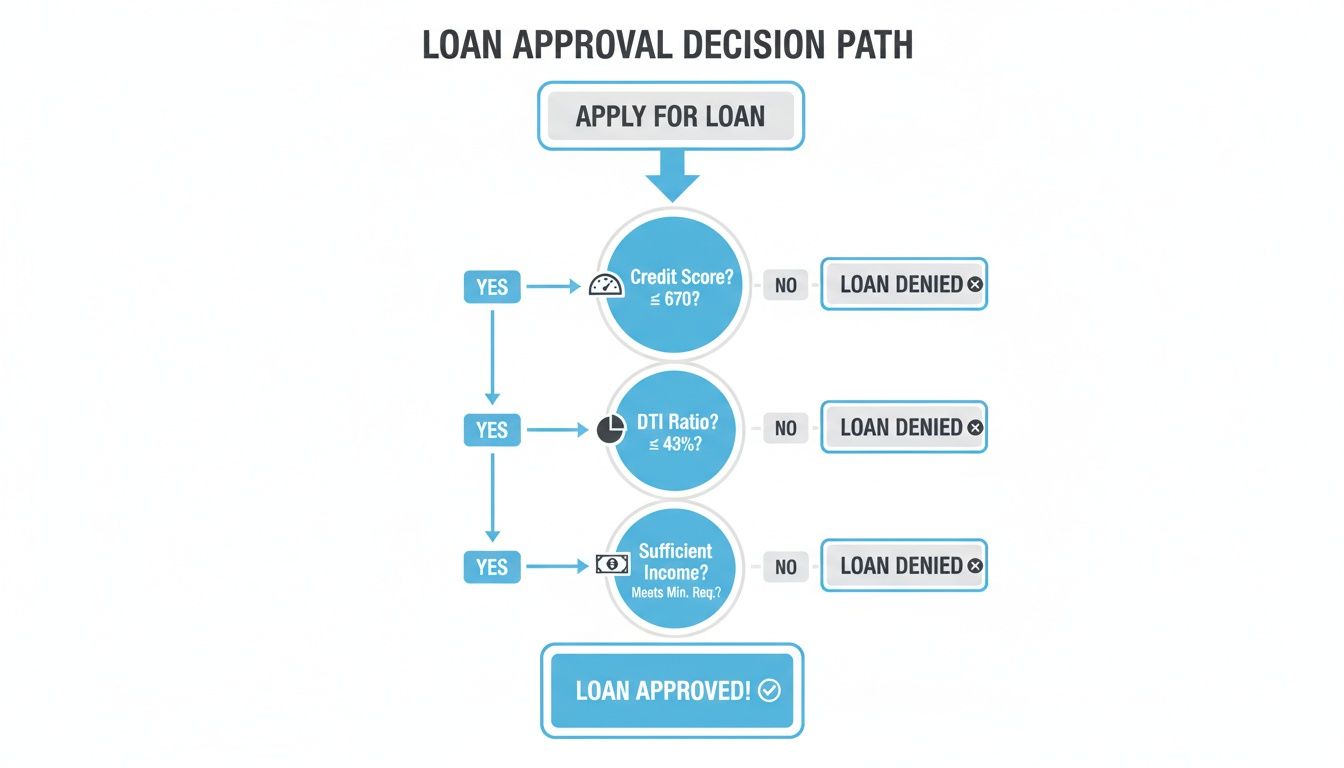
As you can see, lenders follow a pretty clear process. Strong credit and a low DTI open up the best doors for approval and favorable terms.
Balance Transfer Credit Cards
If you have good to excellent credit, a balance transfer card can be an incredible alternative. These cards often dangle a 0% introductory APR for a set period, usually somewhere between 12 and 21 months. The game plan is simple: you move your high-interest balances onto this new card and hustle to pay off the debt before that promotional clock runs out.
The biggest perk here is the chance to pay zero interest for over a year. That means every single dollar you pay goes straight to chipping away at your principal balance. But there are a couple of things you've got to watch out for.
- Balance Transfer Fees: Most cards will charge a one-time fee, typically 3% to 5% of the amount you transfer.
- The Cliff: If you don't clear the balance by the time the intro period ends, whatever's left gets hit with the card's standard, and often very high, interest rate.
This option is perfect for disciplined folks who are confident they can stick to a plan and wipe out the debt within that promotional window.
Debt Management Plans (DMPs)
Need a bit more structure and guidance? A Debt Management Plan (DMP) from a non-profit credit counseling agency is a fantastic option. This isn't a loan. Instead, a certified credit counselor works directly with your creditors to negotiate lower interest rates.
They then roll your various payments into one manageable monthly deposit you make to the agency, which in turn pays your creditors. DMPs usually last from three to five years and can slash the total interest you pay without you having to take on new debt.
A Debt Management Plan is less about a quick fix and more about building healthy financial habits with an expert in your corner. It creates a sustainable budget and a payment schedule you can actually live with.
This path is especially helpful for anyone feeling overwhelmed who could use a professional to guide them through the process.
Debt Settlement Programs
When your debt feels totally insurmountable and you're struggling to make even the minimum payments, debt settlement might come into view. With this approach, a company negotiates with your creditors to let you pay back a lump sum that's less than what you actually owe. Paying just a fraction of your debt sounds great, but this option comes with some serious baggage.
Debt settlement can wreck your credit score for up to seven years, since the settled accounts get marked as "not paid as agreed." On top of that, the IRS might see the forgiven debt as taxable income. Think of this as a last-resort option before considering bankruptcy.
Bankruptcy as a Final Option
For situations involving truly crushing debt, bankruptcy offers a legal process for a fresh start. There are two main types for individuals:
- Chapter 7 Bankruptcy: This involves selling off non-exempt assets to repay creditors, with the remaining eligible debts wiped clean.
- Chapter 13 Bankruptcy: This sets up a court-approved repayment plan over three to five years, which allows you to keep your assets while you catch up.
Bankruptcy has the most severe and longest-lasting negative impact on your credit report, staying on there for up to ten years. It should only be considered after you've exhausted every other possibility and have guidance from a qualified attorney.
Comparing Your Debt Relief Options
With so many paths available, it can be tough to figure out which one fits your situation. This table breaks down the key differences to help you see where you might land.
| Method | Ideal Candidate | Credit Score Impact | Typical Timeframe |
|---|---|---|---|
| Consolidation Loan | Good to excellent credit, needs a structured payment plan. | Can improve score with on-time payments. | 3–7 Years |
| Balance Transfer Card | Excellent credit, disciplined, can pay off debt in 12–21 months. | Can improve score, but short-term dip from new inquiry. | 12–21 Months |
| Debt Management Plan | Struggling with payments, needs guidance and structure. | Neutral to minor negative impact, often improves over time. | 3–5 Years |
| Debt Settlement | Overwhelmed by debt, unable to make minimum payments. | Severe negative impact, lasts up to 7 years. | 2–4 Years |
| Bankruptcy | Facing financial crisis with no other viable options. | Most severe negative impact, lasts 7–10 years. | Months to 5 Years |
Choosing the right strategy is a big decision. What works wonders for one person could be a disaster for another. Take the time to understand the pros and cons of each before moving forward.
Common Mistakes That Can Derail Your Progress
Successfully using a credit card consolidation loan is about more than just finding a good interest rate. You also have to sidestep the common traps that can land you in a worse spot than where you started. Think of a consolidation loan as a powerful tool—used correctly, it works wonders, but one wrong move can undo all your hard work.
The single biggest mistake? Thinking the loan is a magic wand. It’s crucial to understand that consolidation treats the symptom (high-interest debt), not the root cause. If you don't fix the spending habits that got you into debt in the first place, you're just setting yourself up to repeat the cycle.
Ignoring the Underlying Spending Habits
A consolidation loan feels like a huge relief. It simplifies your bills and slashes your interest payments. But that newfound breathing room can create a dangerous illusion that your money problems are solved. A lot of people pay off their cards with the loan, see those beautiful zero balances, and immediately start swiping again.
This is the fastest way to double your debt. Suddenly, you're stuck with the new loan payment and a fresh pile of credit card bills.
To avoid this trap, you have to pair your new loan with a realistic budget. A budget isn’t about punishment; it’s just a plan for your money. Tracking where your cash is going helps you make conscious choices, stay on track, and finally build a stable financial future.
A consolidation loan is a mathematical solution to a debt problem. A budget is the behavioral solution that prevents the problem from happening again. You need both to succeed.
Falling for Predatory Lending Practices
When you're feeling desperate for a solution, predatory lenders can look like a lifeline. They often go after borrowers with lower credit scores, dangling promises of "guaranteed approval" or "no credit check." But these offers almost always come with nasty strings attached that can make your situation much, much worse.
Keep an eye out for these red flags:
- Demands for Upfront Fees: A legitimate lender will never ask you to pay a fee before your loan is approved and the money is sent. Origination fees are normal, but they are taken out of the loan amount itself, not paid out of your pocket beforehand.
- "Guaranteed Approval" Promises: No reputable lender can guarantee approval without looking at your financial details, like your credit and income. It's just not how it works.
- High-Pressure Sales Tactics: If a lender is rushing you to sign on the spot without giving you time to read the contract, walk away. They’re probably trying to hurry you past some terrible terms.
Closing Your Old Credit Card Accounts
After you’ve paid off your cards, your first instinct might be to close the accounts to get rid of the temptation. It’s a good thought, but this move can actually hurt your credit score. Two major parts of your score are the length of your credit history and your credit utilization ratio.
Closing old accounts makes your credit history shorter, which can drag your score down. It also wipes out your total available credit, which can make your utilization ratio shoot up if you have balances on other cards.
A much better strategy is to keep the accounts open with a zero balance. If you need to, cut up the physical cards or tuck them away somewhere safe so you're not tempted to use them.
Finally, always read the fine print of any loan agreement you're considering. Watch out for hidden origination fees that reduce the amount of cash you actually get, or prepayment penalties that charge you extra for paying off your loan early. A little bit of homework upfront can save you from big headaches and make sure your consolidation journey is a success.
When You Need a Professional Debt Partner
While a lot of people can get a handle on their finances with tools like credit card consolidation loans, sometimes the DIY approach just isn't enough. Knowing when to raise your hand and ask for expert help isn't a sign of weakness—it's a smart move that can save you a ton of time, money, and stress down the road.
Certain financial signals are pretty clear indicators that it's time to stop struggling alone. If you've already applied for consolidation loans and gotten denied, or if your debt-to-income ratio is creeping past 40%, lenders are starting to see you as too risky. That's a huge red flag that a standard loan probably isn't the right path.
Likewise, if your situation has ramped up to constant collection calls or threats of wage garnishment, the time for self-guided solutions is officially over. Even just feeling completely overwhelmed by all the options is a valid reason to get help. A professional can cut through the noise and give you a clear, actionable plan.
Finding the Right Professional Partner
This is where a service like DebtBusters can be a game-changer. Think of them as a specialized concierge, not a lender. Their job is to understand your specific situation with a quick, no-pressure consultation and then connect you with the right vetted professional for your needs.
They have a network of experts who specialize in different debt relief solutions, making sure you get matched with the right strategy for you.
- Debt Settlement: If you're buried under overwhelming balances, an expert can negotiate with your creditors to potentially lower the total amount you owe.
- Credit Repair: Is a beat-up credit score holding you back? Specialists can work on cleaning up errors and improving your profile.
- Consolidation and Loan Options: They connect you with partners who can dig up the right loan or alternative financing for your situation.
- Bankruptcy Referrals: When it’s the necessary path, they provide compassionate referrals to qualified attorneys for Chapter 7 or Chapter 13 bankruptcy.
Partnering with a professional service takes the guesswork out of debt relief. Instead of trying to navigate a complex and often predatory industry by yourself, you get a clear, affordable plan and a realistic timeline to get your financial peace of mind back.
The goal is to provide a clear path forward, often with a $0 down start and a typical resolution timeline of 24-48 months. By connecting you with the right expert, they help you stop the stressful collection calls and start a sustainable journey toward becoming debt-free. It’s all about getting expert guidance that’s actually tailored to your unique financial hardship.
Frequently Asked Questions About Consolidation
Stepping into the world of consolidation loans brings up a ton of questions. It's totally normal. Getting straight answers is the only way to feel confident you're making the right move for your future.
Let’s tackle some of the most common things people ask when they're thinking about this path.
Will a Consolidation Loan Hurt My Credit Score?
This is the big one, and the answer isn't a simple yes or no. It's more of a two-step process.
First, you might see a small, temporary dip in your credit score right after you get the loan. This happens for two reasons: the lender runs a hard inquiry on your credit report when you apply, and the new loan lowers the average age of your credit accounts.
But the long-term picture is usually much brighter. As you nail your on-time payments for the new loan, you're building a solid payment history, which is huge. Even better, paying off all those credit cards drops your credit utilization ratio down to zero. That single factor can give your score a serious boost over time.
Can I Get a Loan with Bad Credit?
It’s tougher, for sure, but not impossible. If your credit score is in the "fair" or "poor" range, you’ll probably be offered higher interest rates, which can eat into the savings you’re hoping to get from consolidating.
Some lenders do specialize in working with people who have less-than-perfect credit.
If you're shopping for a consolidation loan with poor credit, you have to be extra careful. Compare every offer to make sure the new loan's interest rate is actually lower than what you're paying on your credit cards. Otherwise, what's the point?
Another smart move is to apply with a co-signer. If you have a trusted friend or family member with a strong credit history, adding them to the application can dramatically improve your approval odds and help you lock in a much better interest rate.
What Happens to My Old Credit Cards?
Okay, so you’ve used the loan to wipe out your card balances. Now what? Your first instinct might be to grab the scissors and close all those accounts to avoid temptation.
Hold on. That can actually backfire.
It's almost always better for your credit score to keep the old accounts open. Closing them does two things you don't want: it shortens the average length of your credit history and shrinks your total available credit. Both of those can drag your score down.
The best approach? Keep the cards open but put them away in a drawer. Maybe use one for a tiny purchase once every few months and pay it off immediately, just to keep it active. This way, you preserve all that good credit history you've built.
How Is This Different from Debt Settlement?
This is a really important distinction to understand.
With a consolidation loan, you are paying back 100% of what you owe, just with a new interest rate and a single monthly payment. It's a structured, responsible way to manage your debt.
Debt settlement, on the other hand, is when a company negotiates with your creditors to let you pay back less than the full amount. While it sounds good on the surface, settlement hammers your credit score for years and can even lead to you owing taxes on the forgiven debt. They are two completely different financial strategies.
Feeling like you're in over your head and not sure which way to turn? DebtBusters can connect you with vetted professionals who will lay out a clear, no-obligation plan to help you get back in control. Explore your options and see what works for you.